
The Beast in the Jungle
Overview
Henry James’s The Beast in the Jungle is a psychological novella first published in 1903 as part of his story collection The Better Sort, issued in London and New York. Rather than building its suspense around a sequence of outward adventures, James makes the central mystery a private conviction: John Marcher believes that an extraordinary, possibly catastrophic event is destined to define his life. The story asks what happens when a person organizes his present around an imagined future.
Plot
At a gathering, Marcher meets May Bartram and gradually learns that they encountered one another in Italy ten years earlier. May recalls the confidence he had shared with her then: he felt certain that something rare and momentous awaited him, though he could not say what it would be. She is the only person to whom he has revealed this belief. Marcher has largely forgotten the earlier conversation, but, once reminded, he resumes his watch for the event he calls his fate. May offers to keep the secret and wait alongside him.
They remain close over the years. May inherits money, and the two spend time together, including visits to museums and galleries. Marcher wonders whether the anticipated event might be love, but he cannot recognize their companionship as an invitation to commit himself to her. His attention remains fixed on the future catastrophe or revelation he expects to arrive. As time passes, May becomes ill and dies. Only later, at a cemetery, does Marcher see a stranger grieving with an intensity that makes him confront what he has failed to feel. He understands that the beast was not a literal creature or an external disaster. His consuming fate has been the realization that he let life pass while guarding himself for an imagined event, and that he did not understand May’s love until it was too late.
Themes and form
The beast is the novella’s governing metaphor: it gives shape to Marcher’s dread, but ultimately points back to his own self-absorption and avoidance. James explores fate and free will without resolving them into a simple lesson. Marcher’s belief in a predetermined destiny becomes a way of postponing genuine choice; the future he watches for keeps him from entering fully into the relationships and experiences already available to him. May’s patience gives the story its emotional counterpoint, while her death makes the cost of his waiting irreversible. The conclusion joins love, mortality, loneliness, and missed possibility in a single recognition.
Written during James’s mature period, the novella exemplifies his interest in consciousness and the limits of perception. Its third-person narration stays close to Marcher’s thoughts without requiring readers to accept his interpretations as truth. Repeated conversations, imperfect memory, and the passage of years carry much of the action, making psychological change more important than physical incident. The result is a restrained, parable-like narrative that also works as an intimate study of self-deception. The Beast in the Jungle has lasting standing among James’s finest short narratives and remains widely read as a haunting account of a life diminished by waiting for life to begin.
About the Author
Origins and education
Henry James was born in New York City on April 15, 1843, into an affluent family deeply engaged with intellectual life. His father, Henry James Sr., was a lecturer and social thinker; his elder brother William became a prominent philosopher and psychologist, and his sister Alice was also a writer. The family moved between the United States and Europe during James’s childhood and youth. He studied with tutors in cities including Geneva, London, Paris, Bologna, and Bonn, an education shaped by travel rather than by a single institution. These early experiences gave him lasting familiarity with differences between American and European social worlds, a contrast that would recur throughout his fiction. James attended Harvard Law School but did not pursue a legal career, choosing instead to devote himself to literature.
Writing career and major works
James began publishing in the 1860s and went on to write novels, short fiction, plays, travel writing, criticism, and memoir. His early novel Roderick Hudson appeared in 1875, followed by The American in 1877. Daisy Miller, published in 1878, brought him wider attention through its portrayal of an American woman navigating European society. Washington Square followed in 1880, and The Portrait of a Lady in 1881 became one of his most celebrated explorations of individual choice and social constraint. Later works include The Bostonians (1886), the psychologically ambiguous ghost story The Turn of the Screw (1898), The Wings of the Dove (1902), The Ambassadors (1903), and The Golden Bowl (1904). The Beast in the Jungle, also published in 1903, is among his best-known shorter narratives. In his later years James revised and prepared many of his works for a collected edition, reflecting his sustained interest in the craft of fiction.
Later life and reputation
James spent much of his adult life in Europe, especially in Britain, while continuing to write about American characters and the cultural distance between the United States and Europe. His fiction is noted for its close attention to consciousness: characters interpret one another, misread social situations, and discover how limited their knowledge can be. Rather than relying only on plot, James often develops meaning through perspective, implication, and the gradual accumulation of psychological detail. His formal experiments and criticism helped shape the development of the modern novel, and he is widely regarded as a major figure in the transition from nineteenth-century realism to literary modernism.
James became a British citizen in 1915. He died in Chelsea, London, on February 28, 1916, aged seventy-two. His reputation has endured through the continuing readership and adaptation of works such as The Portrait of a Lady, The Turn of the Screw, The Wings of the Dove, and The Ambassadors. The subtlety of his narrative methods and his investigations of perception, morality, desire, and social behavior remain influential subjects for writers and critics. He is remembered as one of the most important American-born novelists of his era and as a central innovator in psychological fiction.
StoryFlow
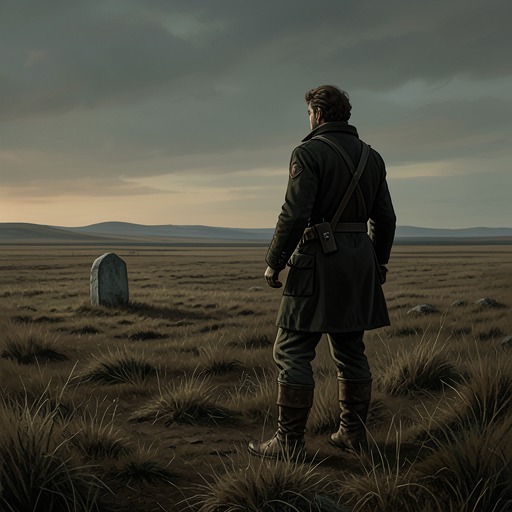
Marcher’s Fatalistic Law
This flow traces how John Marcher’s belief in a unique approaching fate becomes the organizing principle of his life and finally exposes its emptiness.
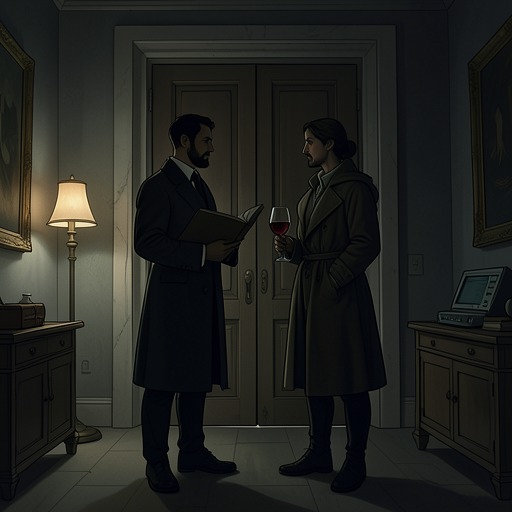
The Weatherend Reunion and Vigil
This flow follows the reunion that turns an old acquaintance into the witness and companion of Marcher’s long suspense.

The Beast in the Jungle
This flow traces the changing meaning of Marcher’s Beast, from imagined external catastrophe to the inward catastrophe of a life without love.
